1986 Doi Moi (Renewal): Pivotal turning point in socialist construction

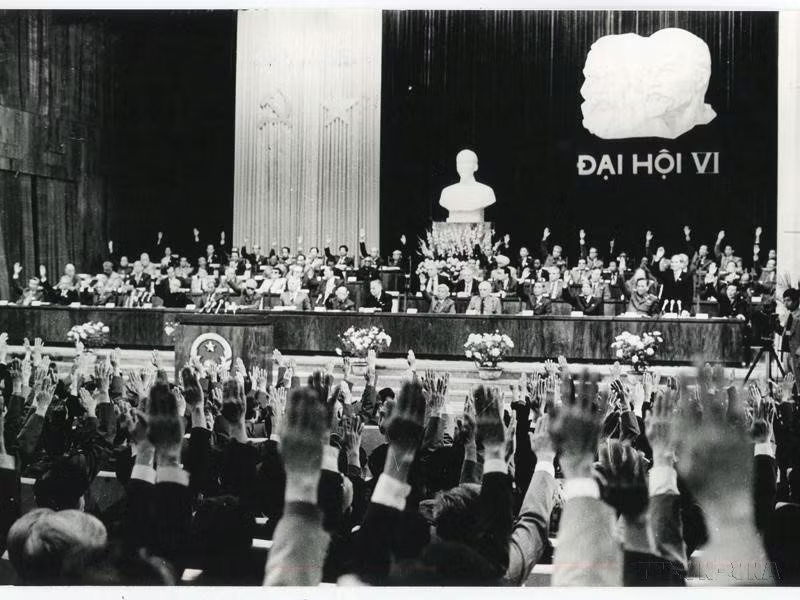
The sixth National Party Congress in December 1986 mapped out the Doi Moi (Renewal) policy and initiated the process of Party-led reforms in Vietnam. This marked a crucial turning point in socialist construction, unleashing national strength and potential to propel the country forward. During the 1986–1995 period, the Party led the reform, abolished the subsidy mechanism, and transitioned to a socialist-oriented market economy, overcoming socio-economic crises and laying a firm foundation for international integration.

01-doi-moi-nam-1986-ava.jpg
The sixth National Party Congress in December 1986 mapped out the Doi Moi (Renewal) policy and initiated the process of Party-led reforms in Vietnam. This marked a crucial turning point in socialist construction, unleashing national strength and potential to propel the country forward. (Photo: VNA)
02-doi-moi-nam-1986.jpg
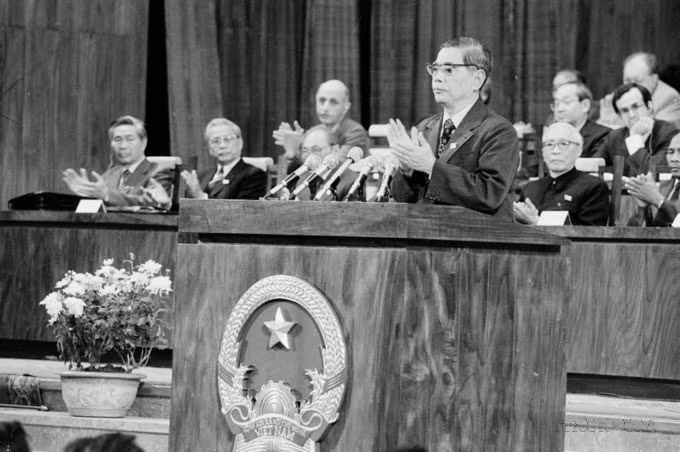
At the sixth National Party Congress, in his speech after being elected General Secretary, Comrade Nguyen Van Linh emphasises that this Congress marks a significant transition in the process of inheriting and renewing the Party’s leadership. (Photo: VNA)
03-doi-moi-nam-1986.jpg
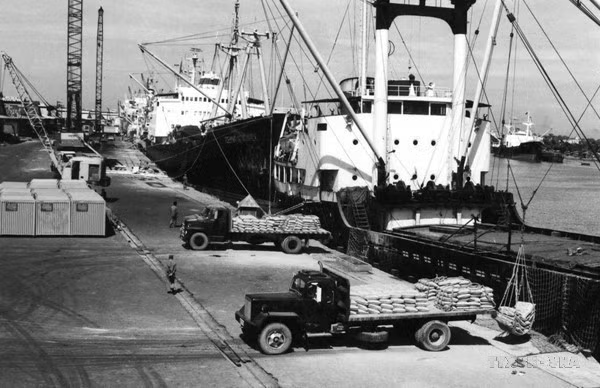
On April 5, 1988, under the chairmanship of Party General Secretary Nguyen Van Linh, the Politburo issues Resolution No. 10 on renewing agricultural economic management. Only a year later, from a food-importing nation, Vietnam not only ensures domestic food security but also exports over one million tonnes of rice. In the photo: Loading rice for exports at Saigon Port. (Photo: VNA)
04-doi-moi-nam-1986.jpg
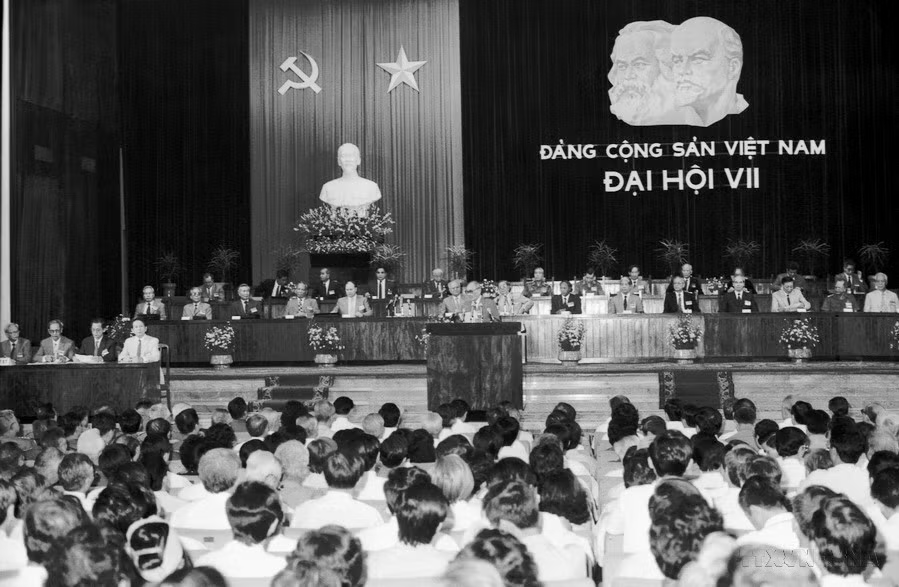
The seventh National Party Congress (June 1991) affirms the continuation of synchronous and thorough renewal across all fields with appropriate steps and methods while maintaining a socialist orientation. Party resolutions from the eighth Congress to the present continue to affirm the consistency and persistence in implementing the country's renewal and international integration policy. (Photo: VNA)
05-doi-moi-nam-1986.jpg
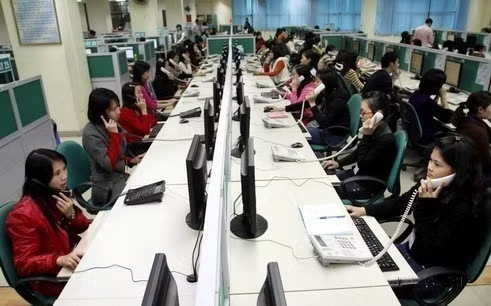
The military-run telecommunications company Viettel Group (established on June 1, 1989) has four customer care centres located in Hanoi, Hai Phong, Da Nang, and Ho Chi Minh City. (Photo: VNA)
06-doi-moi-nam-1986.jpg
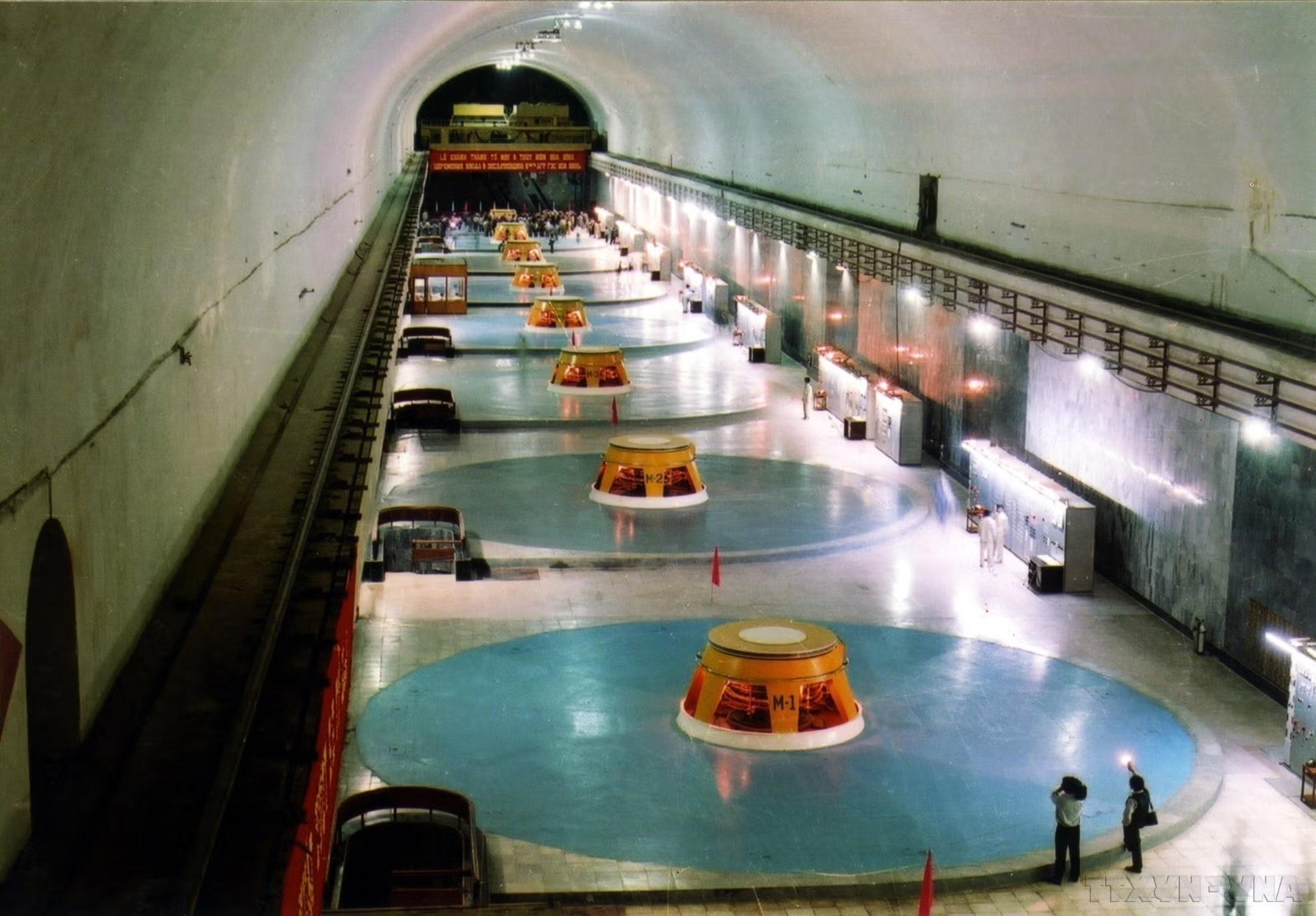
The Hoa Binh Hydropower Plant, the largest in Southeast Asia with a capacity of 1,920MW, began construction in 1979 and was inaugurated in 1991, significantly contributing to the country's post-war economic recovery. (Photo: VNA)
07-doi-moi-nam-1986.jpg
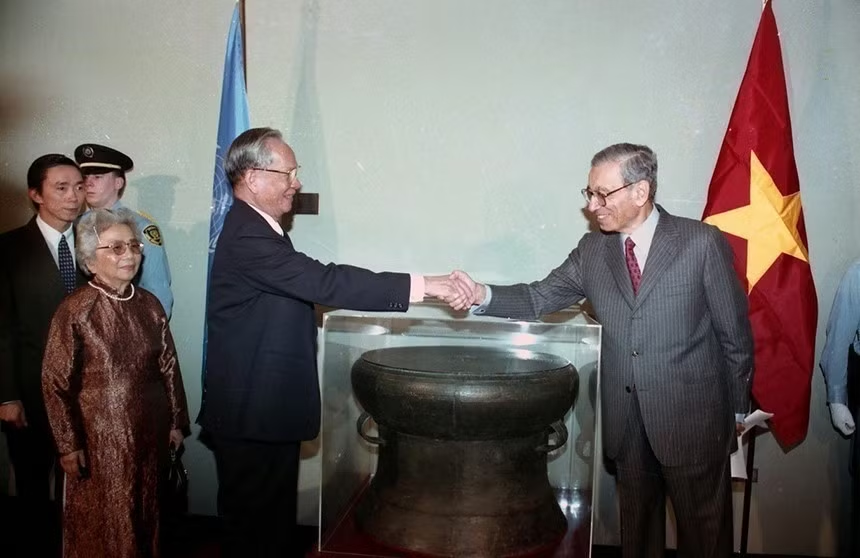
The seventh National Party Congress identifies the focus of foreign affairs as continuing to create a peaceful, stable, and favourable international environment for the cause of national construction and defence. In the photo: On the occasion of attending the 50th anniversary of the United Nations (1945 - 1995), on October 25, 1995, at the UN Headquarters in New York (the US), President Le Duc Anh presents a replica of the Ngoc Lu bronze drum to UN Secretary-General Boutros B. Ghali. (Photo: VNA)
08-doi-moi-nam-1986.jpg
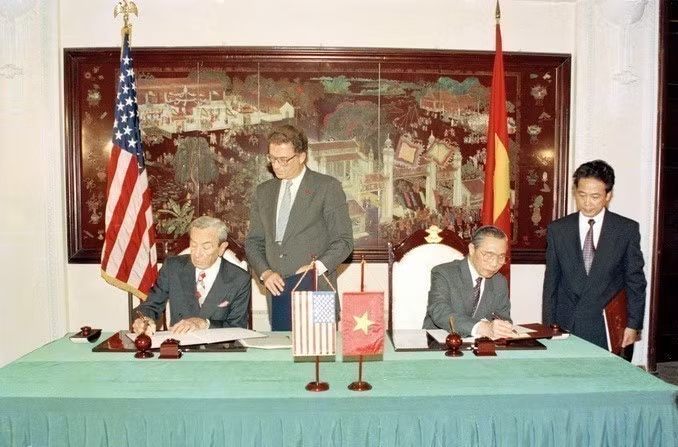
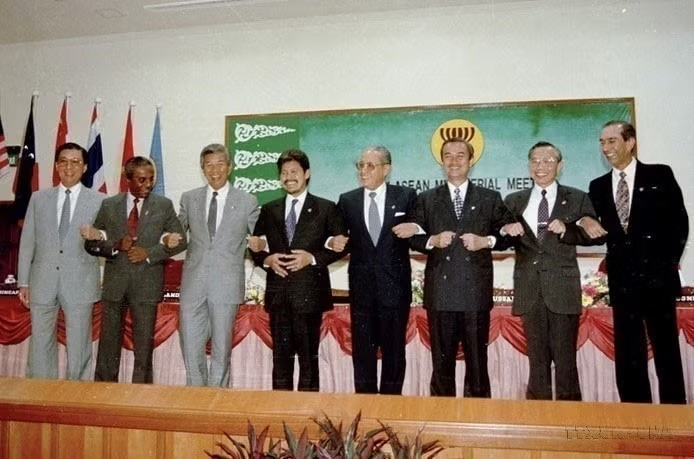
By the mid-1990s, Vietnam had broken out of isolation, significantly expanding its international relations. For the first time, the country established official ties with all major nations, including the five permanent members of the UN Security Council, and joined ASEAN. In the photo: On August 5, 1995, in Hanoi, US Secretary of State Warren Christopher and Foreign Minister Nguyen Manh Cam sign the protocol formally establishing Vietnam–US diplomatic relations. (Photo: VNA)
09-doi-moi-nam-1986.jpg
Vietnam’s foreign relations have expanded and deepened steadily, with the country strengthening ties with numerous countries, territories, and international organisations. In the photo: The ceremony admitting Vietnam as the seventh official member of ASEAN, held on July 28, 1995, in Brunei. (Photo: VNA)