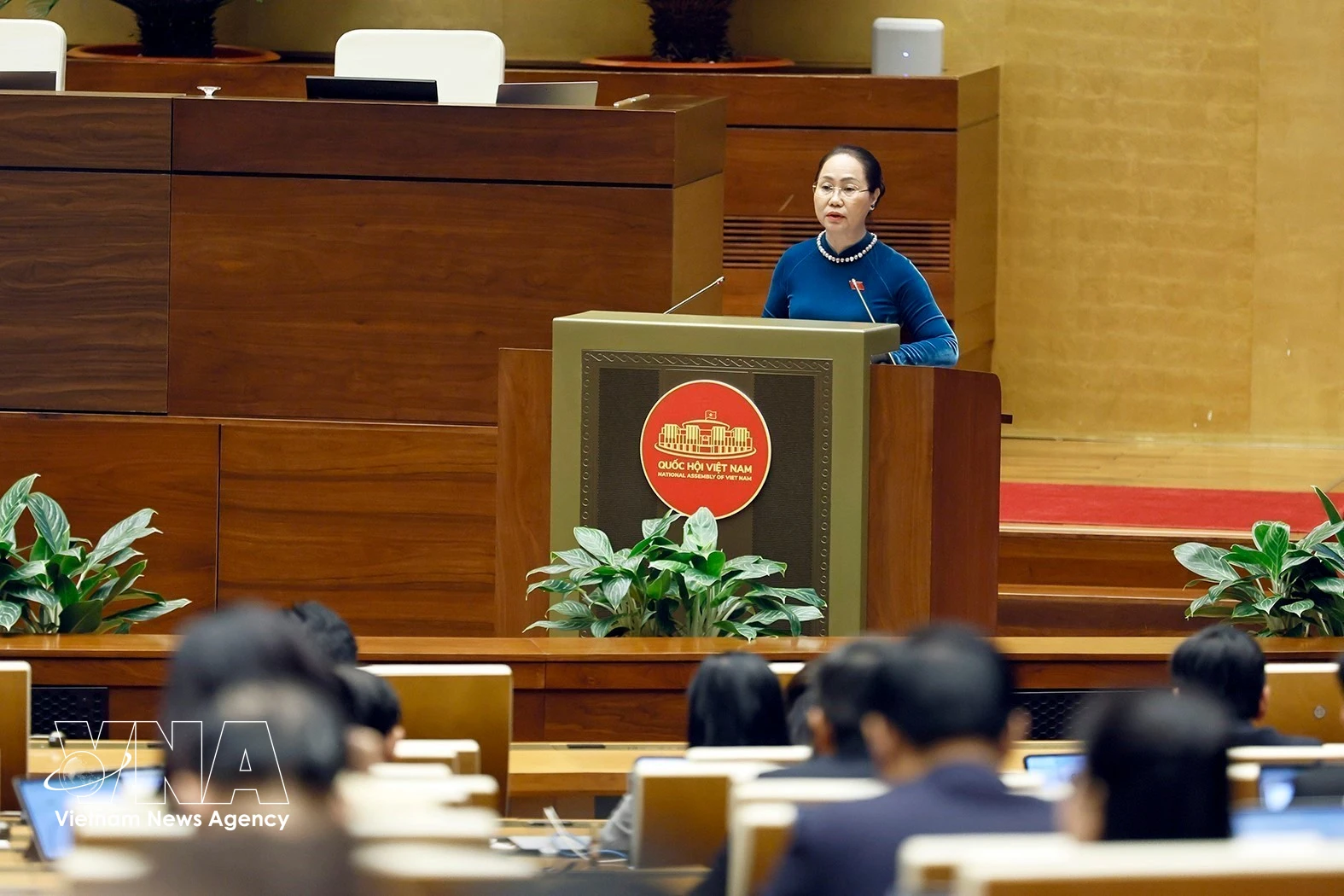
Hanoi (VNA) – The 16th National Assembly (NA) discussed a draft law amending and supplementing several provisions of seven laws on physical training and sports, tourism, libraries, cinematography, cultural heritage, advertising and press activities at its second session on November 10.
The proposed amendments aim to simplify administrative procedures, remove practical obstacles and improve the effectiveness of state management in these fields.
Regarding tourism, deputy Nguyen Dang An from Lang Son province called for provincial-level tourism authorities to take the lead in assessing applications for recognition of provincial-level tourist areas. He said the establishment of inter-sectoral assessment councils should depend on each area's scale, characteristics and coordination requirements, rather than solely on the number of communes it covers.
On cultural heritage, he urged clearer separation between professional heritage assessments and investment and construction procedures to avoid repeated appraisals and overlapping responsibilities. He also called for clearer arrangements for book circulation between libraries, as well as more flexible notification requirements in emergencies caused by natural disasters or unsafe facilities.
Deputy Vo Ngoc Thanh Truc from Ho Chi Minh City supported simplifying tourism procedures and introducing electronic tour guide cards, but stressed the need to protect the rights of more than 49,000 tour guides. She proposed clarifying the legal status of guiding contracts to ensure that those working under paid employment arrangements and subject to management and supervision receive social insurance coverage.
Deputy Ly Thi Lan from Tuyen Quang province proposed requiring the State to ensure budget allocations for films serving national, ministerial and local political tasks, in line with the National Assembly's Resolution No. 28/2026/QH16 on Vietnamese cultural development. She also called for tour guide cards withdrawn when holders no longer meet professional requirements to be reissued once those requirements are restored, rather than imposing a mandatory 12-month waiting period.
Deputy Nguyen Thi Kim Thoa from Vinh Long province suggested prioritising state-commissioned films on happy families, Vietnamese culture and people, and children. She also called for stricter age controls on films recommended or automatically played by digital platforms to better protect children online.
Deputy Nguyen Thi Yen Nhi, also from Vinh Long province, proposed making regular physical activity a key objective of school physical education, with a gradual move towards the World Health Organisation's recommendation of at least 60 minutes of moderate-to-vigorous activity daily for children and adolescents. She stressed the need for closer coordination between schools and families and greater investment in school sports facilities.
On advertising, deputy Nguyen Vu Trung from Ho Chi Minh City proposed fully digitalising administrative procedures through a single online submission point, with relevant agencies sharing data and coordinating internally. He also called for clearer safety and maintenance responsibilities for outdoor advertising structures and limits on the brightness and operating hours of large electronic screens.
Responding to lawmakers, Minister of Culture, Sports and Tourism Lam Thi Phuong Thanh said the amendments to the seven laws were intended to institutionalise Party policies, remove institutional bottlenecks and mobilise social resources.
She stressed that decentralisation and delegation of authority are central to the proposed changes, with clearer coordination between central agencies and local authorities.
Responsibilities will be assigned based on the functions, capacity and practical conditions of each administrative level, while central agencies will retain oversight of inter-sectoral and specialised tasks.
The Government will also review and complete guiding decrees and circulars to ensure transparency and feasibility, without introducing unnecessary administrative procedures or additional business conditions.
The minister said the current draft focuses on urgent issues requiring immediate action. Broader policy changes will undergo further practical reviews and impact assessments before being incorporated into comprehensive revisions of relevant laws, with the Tourism Law expected to undergo a full revision in 2027./.