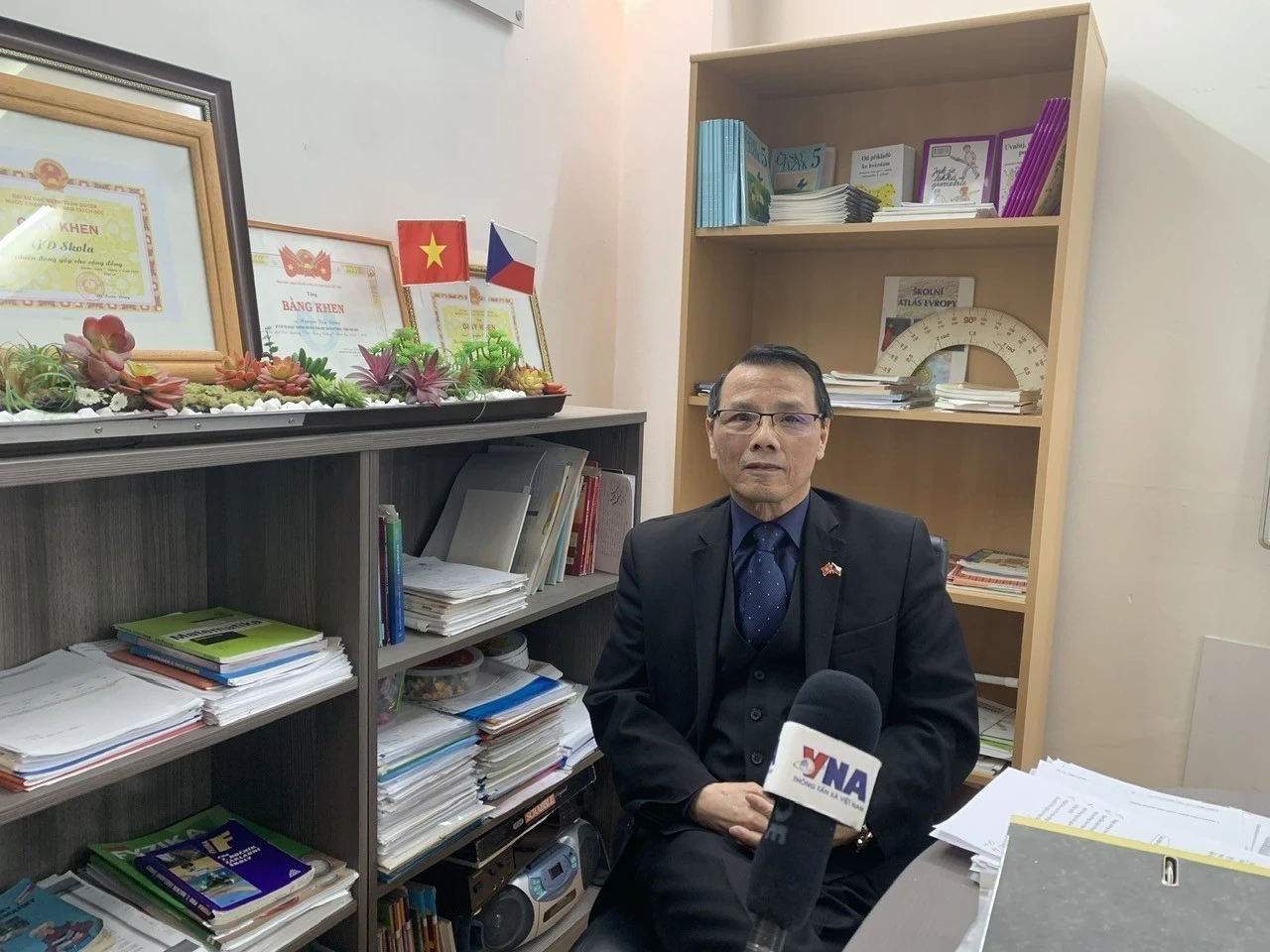
Prague (VNA) – The 14th National Party Congress has generated strong confidence and motivation for overseas Vietnamese (OVs) to continue accompanying and making active contributions to the homeland's development, said Dr Nguyen Duy Nhien, an OV intellectual working in the Czech Republic.
Speaking to Vietnam News Agency correspondents, Nhien said the congress reaffirmed the consistent viewpoint that OVs are an inseparable part of the Vietnamese people. This stance, clearly reflected in the congress documents, demonstrates the Party’s and State’s deep concern for OVs and further strengthens the communities' confidence in the Party’s leadership in the country’s new development phase.
Sharing his expectations for new opportunities ahead, he said the 14th Congress reflects a strong determination to create breakthrough development for Vietnam in the 2030–2045 period, while clearly defining the role, position and positive contributions of OVs in the successful implementation of its resolutions.
According to Nhien, the congress underscored the need to make more effective use of the vast potential of OV communities, including both economic resources as “hard power” and intellectual, scientific, technological, innovative capacity and international cooperation networks as “soft power”. Notably, such a guideline doesn't remain at the level of an orientation, but have been institutionalised through concrete mechanisms and policies to provide favourable conditions for OVs to make contributions, particularly in science – technology, innovation, digital transformation, health care, education – training, and industrial development back home.
From the perspective of someone long engaged in OV community-building affairs, Nhien said Vietnam needs to continue refining its legal and institutional framework, expanding investment and business opportunities, and widening channels for OVs to participate in science – technology, digital transformation, and other areas of social life.
He also stressed the importance of developing specialised programmes to connect expatriates and intellectuals by field, thereby forming effective information networks and coordination mechanisms to enable practical contributions to national development.
He further highlighted the need to support OVs to build strong and sustainable communities in their host countries. At the same time, the role of people-to-people diplomacy should be further promoted, with each individual and community organisation of OVs regarded as an important bridge in advancing cooperation, attracting investment, and strengthening Vietnam's friendly relations with other countries.
The scholar noted that Vietnam and the Czech Republic share a long-standing friendship, with the more than 100,000-strong Vietnamese community in the European country playing an important bridging role in bilateral ties. The elevation of their relations to a strategic partnership in early 2025 has generated new momentum for joint work across fields such as economy, science – technology, digital transformation, education, health care, agriculture, and industry.
He expressed confidence that the relationship will continue to flourish, meeting the shared expectations of the two peoples./.