Hanoi (VNA) – A sweeping policy drive to elevate the health of the Vietnamese people is entering a critical phase, even as authorities warn of increasingly aggressive misinformation campaigns seeking to discredit it.
Issued on September 9, 2025 by the Politburo, Resolution No. 72-NQ/TW lays out a far-reaching strategy to protect, care for, and strengthen physical and mental health, improve people's stature, extend life expectancy and increase the number of healthy years lived. It reframes health care as both a core development objective and a strategic driver of sustainable development.
The resolution calls for a decisive shift from a treatment-centred model to a proactive, preventive and life-cycle approach – embedding health awareness, healthy lifestyles and early screening into everyday life.
By 2030, Vietnam aims to raise the average height of children and adolescents aged 1–18 by at least 1.5 cm, lift life expectancy to 75.5 years, and ensure at least 68 of those years are lived in good health.
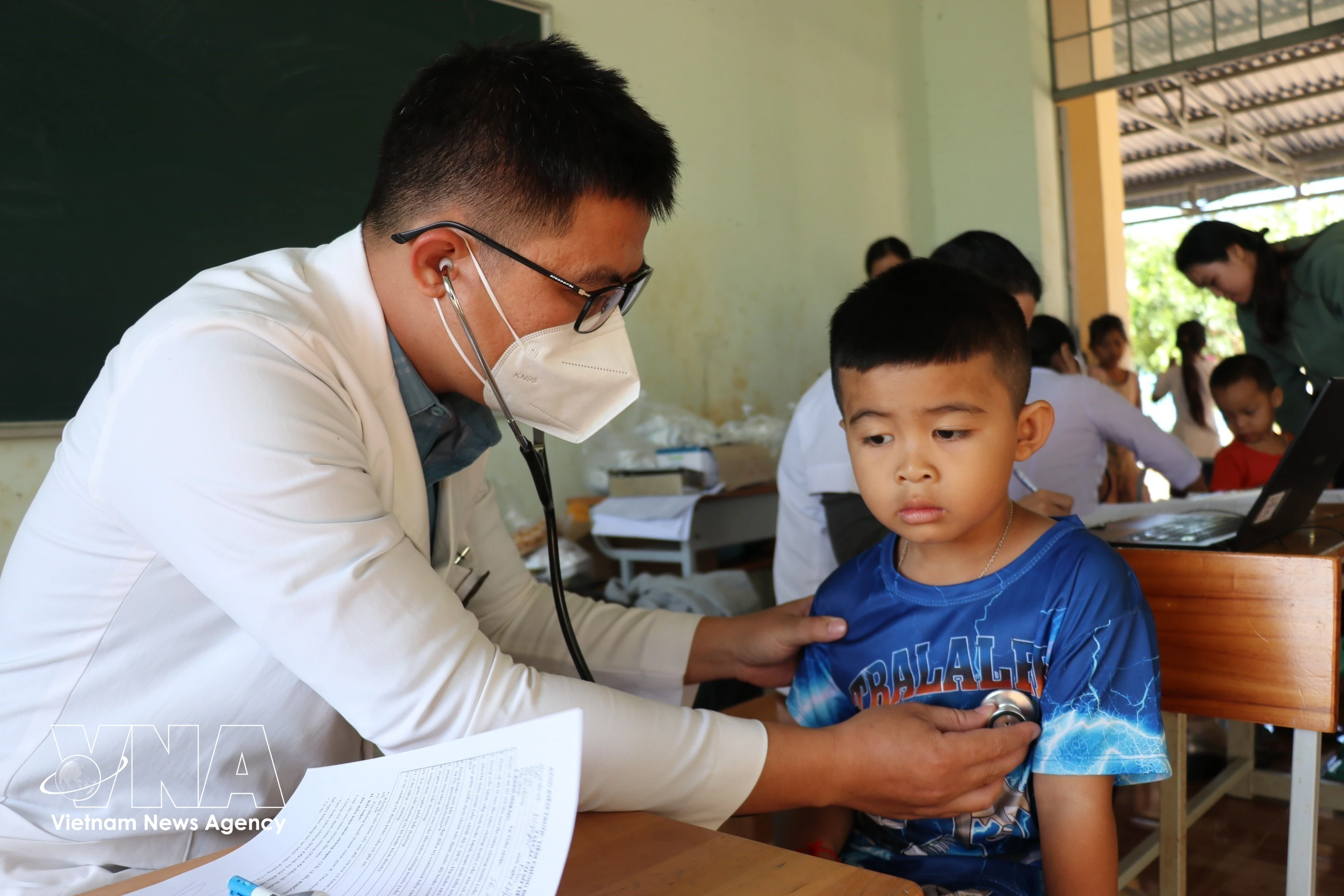
Among its most closely watched measures is the introduction of free annual health check-ups or screenings for all citizens starting in 2026, coupled with the rollout of electronic health records to enable continuous life-long health management. The policy also sets out a phased roadmap towards basic hospital fee exemptions within the coverage of national health insurance by 2030 – steps expected to significantly reduce out-of-pocket medical costs.
Health Minister Dao Hong Lan described the initiative as a “transformational breakthrough” in public health care, particularly for vulnerable and low-income groups, while also marking a fundamental shift towards preventive care and early intervention.
Yet, despite its clear humanitarian, social and economic benefits, Resolution 72 has become a target of hostile rhetoric online. Such attacks are less about the substance of the policy and more about undermining a broader development philosophy that places people at the centre of policymaking.
Vietnam’s healthcare system has, in fact, built a strong foundation for the targeted reforms. In a working session held on April 17, the Health Minister reported that health insurance coverage now exceeds 95%, the ratio of doctors has reached 15 per 10,000 people, and disease control capacity has improved markedly. Medical examination and treatment quality has continued to be enhanced; many advanced medical techniques been adopted, increasingly on par with international standards; while administrative procedures been streamlined.
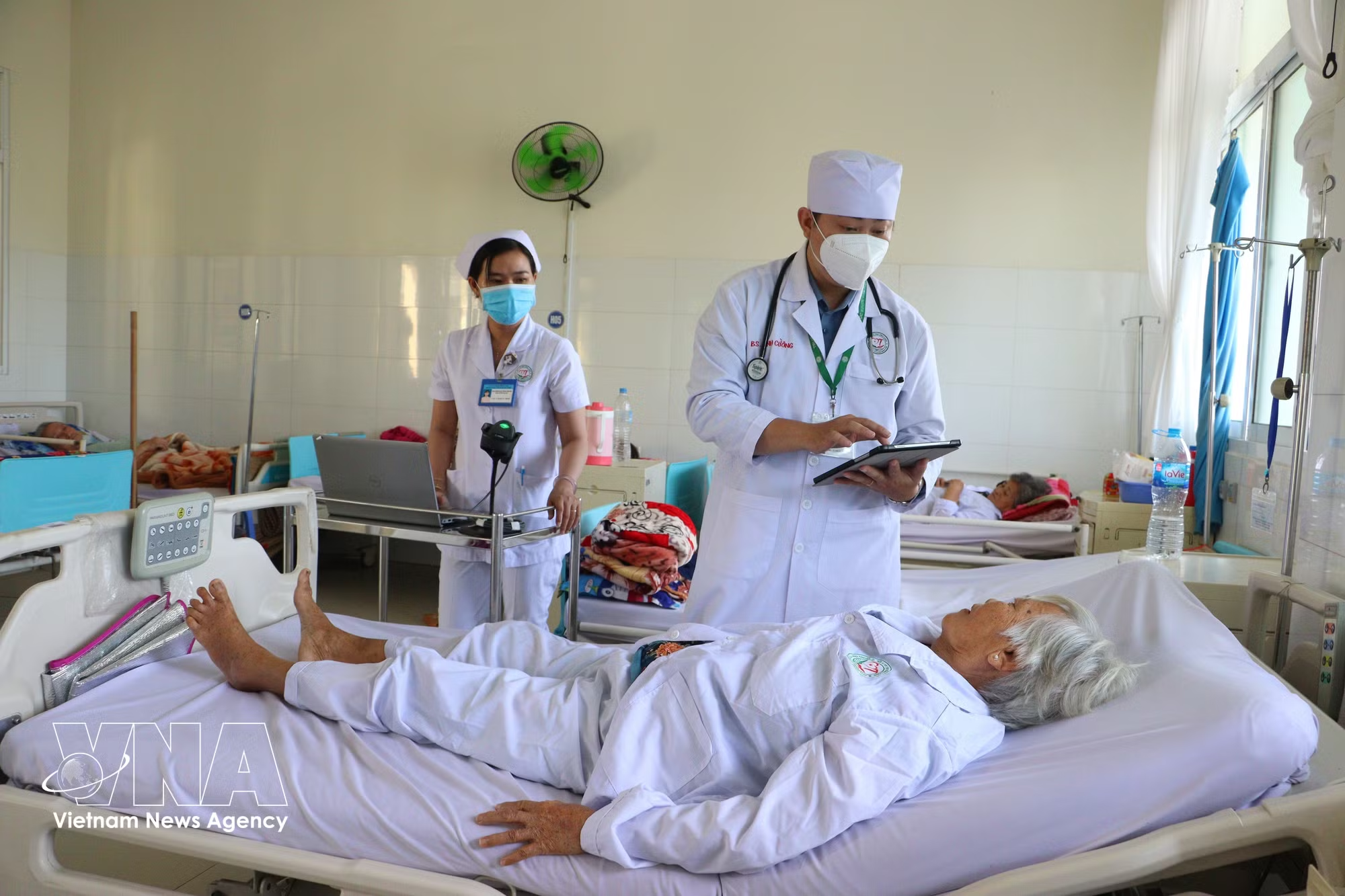
Digital transformation is also accelerating – approximately 75% of hospitals have implemented electronic medical records, and more than 34.3 million digital health profiles been created via the VNeID platform. The Ministry of Health is working to complete 14 specialised databases in 2026, paving the way for a comprehensive national health database – an essential cornerstone of modern governance.
In terms of human resources development, the Ministry of Health is formulating a project to develop five key universities specialising in medical and pharmaceutical education, with submission to the Prime Minister expected in the fourth quarter of 2026. At the same time, it is finalising competency standards for a wide range of professional roles, with particular emphasis on out-of-hospital emergency responders.
At the same time, institutional frameworks are being strengthened, with key legislation such as the Law on Disease Prevention and the Population Law under development. Authorities are also piloting mechanisms for health insurance to cover early screening and diagnostic services, alongside a long-term plan to gradually implement hospital fee exemptions.
Medical experts consistently underscore the life-saving value of early detection. For instance, Assoc. Prof. Dr. Nguyen Hoai Nam from the University of Medicine and Pharmacy at Ho Chi Minh City (UMP HCMC) said that lung cancer identified at Stage I can yield a five-year survival rate of over 30%, compared to just 2–4% at Stage III. Regular screenings can similarly detect conditions such as diabetes, cirrhosis, cardiovascular disease and mental health disorders at an early stage, enabling timely and effective treatment.
However, a persistent psychological barrier – fear of diagnosis – continues to deter some individuals, particularly among older and vulnerable groups. This contributes to a notable gap between Vietnam’s average life expectancy of 73.64 years and its healthy life expectancy of just 65.4 years.
Authorities warn that hostile forces are exploiting such fears through what is increasingly described as “cognitive warfare” – the use of digital platforms, social media, misinformation and even artificial intelligence to manipulate perceptions, sow doubt and erode public trust. Allegations dismissing free health check-ups as “unrealistic” or “populist”, or questioning the feasibility of nationwide screening, are cited as typical examples.
Officials stress that Resolution 72 is grounded in practical capacity and sustained reform, not “starting from zero”. Recent sectoral reviews have highlighted tangible progress across healthcare delivery, workforce development and digital infrastructure, reinforcing the feasibility of its targets.
As implementation gathers pace, authorities are urging the public to strengthen their “immunity” against misinformation by relying on verified sources, exercising caution on social media and refraining from sharing unverified health-related content./.