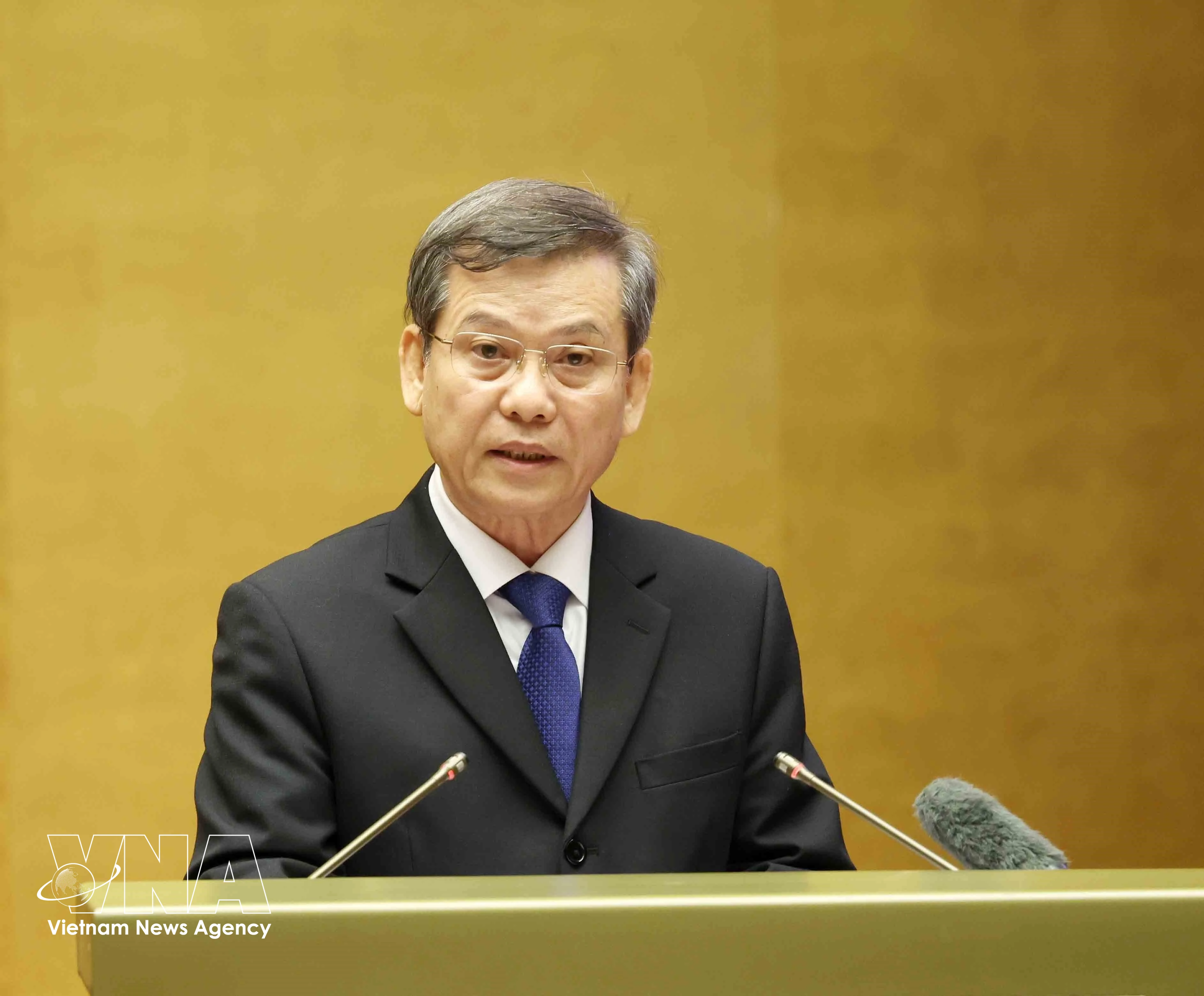
Hanoi (VNA) – Politburo member, Secretary of the Party Central Committee and Chairman of its Commission for Internal Affairs Le Minh Tri has highlighted a shift from reactive enforcement to proactive prevention as one of the key contents of the resolution on the continued enhancement of the Party’s leadership in the fight against corruption, wastefulness and negative phenomena in the new period.
At the national conference held on April 13 to study, disseminate and implement the resolutions of the second plenum of the 14th Party Central Committee, Tri reviewed the 20-year implementation of the Resolution of the 10th-tenure Party Central Committee’s third plenum, noting that anti-corruption efforts have been carried out in a persistent, resolute, comprehensive and coordinated manner, with no “off-limits zones” or exceptions.
The work has achieved significant and breakthrough results, contributing to the Party and political system building, political stability, socio-economic development and stronger public trust in the Party, the State and the regime, he said.
The campaign has gained broad public support and evolved into a powerful movement. Discipline and power control have been strengthened, with synchronised enforcement of Party discipline, administrative sanctions and criminal measures. Notably, the Party has issued five regulations on the control over the exercise of power and anti-corruption across key areas, namely the personnel work; Party inspection, supervision, discipline enforcement and auditing; investigation, prosecution, adjudication and enforcement of judgements; law-making; and public asset management and use.
Recent major resolutions, including those on science – technology development, legal reform and private sector development, along with the conclusions addressing bottlenecks in land-related and delayed projects, are being institutionalised to quickly translate Party policies into practice.
The resolution sets the overarching goal of firmly and persistently preventing, detecting and deterring corruption, wastefulness and misconduct; building the Party and political system clean and comprehensively strong to enhance the people's trust in the Party, the State and the regime; while promoting socio-economic development and supporting sustained high economic growth, contributing to Vietnam’s long-term development vision toward 2045.
A notable new approach emphasises strict yet humane and context-sensitive handling of violations, ensuring fairness while prioritising maximum asset recovery and encouraging voluntary remediation. This approach aims to protect those who innovate and act for the common good, according to Tri.
The resolution also underscores that science – technology, innovation and digital transformation are central drivers of a new growth model, while the private sector is a key engine of the national economy. Therefore, the resolution targets refining legal frameworks, including the Penal Code and the Criminal Procedure Code, to both encourage innovation and appropriately manage risks, including considering reduced liability for those committing violations without personal gain and with remedial actions.
In line with a shift from fighting to prevention, the resolution outlines measures to ensure officials “do not want, cannot, do not dare, and do not need” to engage in corruption, through integrity-building, stricter mechanisms, effective power control and stringent settlement, along with improved remuneration.
Tri said key priorities include improving institutions, enhancing transparency and accountability, strengthening the control of the exercise of power, building a contingent of capable and ethical cadres, accelerating administrative reform and digital transformation, and ensuring effective management of public resources. Greater emphasis will also be placed on combating wastefulness in both material resources and development opportunities.
The resolution clearly assigns responsibilities to Party committees and leaders at all levels, requiring them to take direct accountability while also encouraging proactive efforts to detect and handle wrongdoings, he noted, adding that the Politburo has ordered the building of an implementation plan which will include eight major tasks and 114 specific actions with defined timelines and outputs.
Described as a “declaration” of the Party’s determination to push ahead with the fight against the "internal enemy", the resolution is expected to create strong momentum in building a clean, strong, efficient and effective Party and political system, in line with the directions set by Party General Secretary and State President To Lam./.