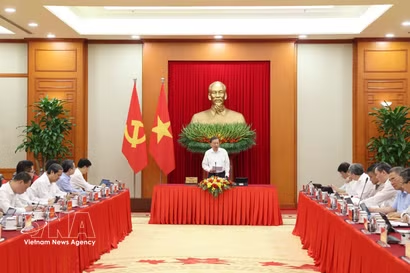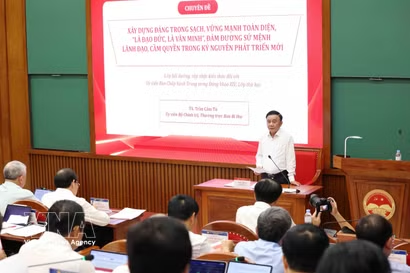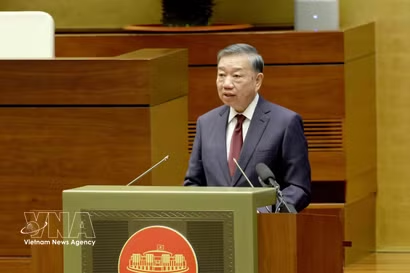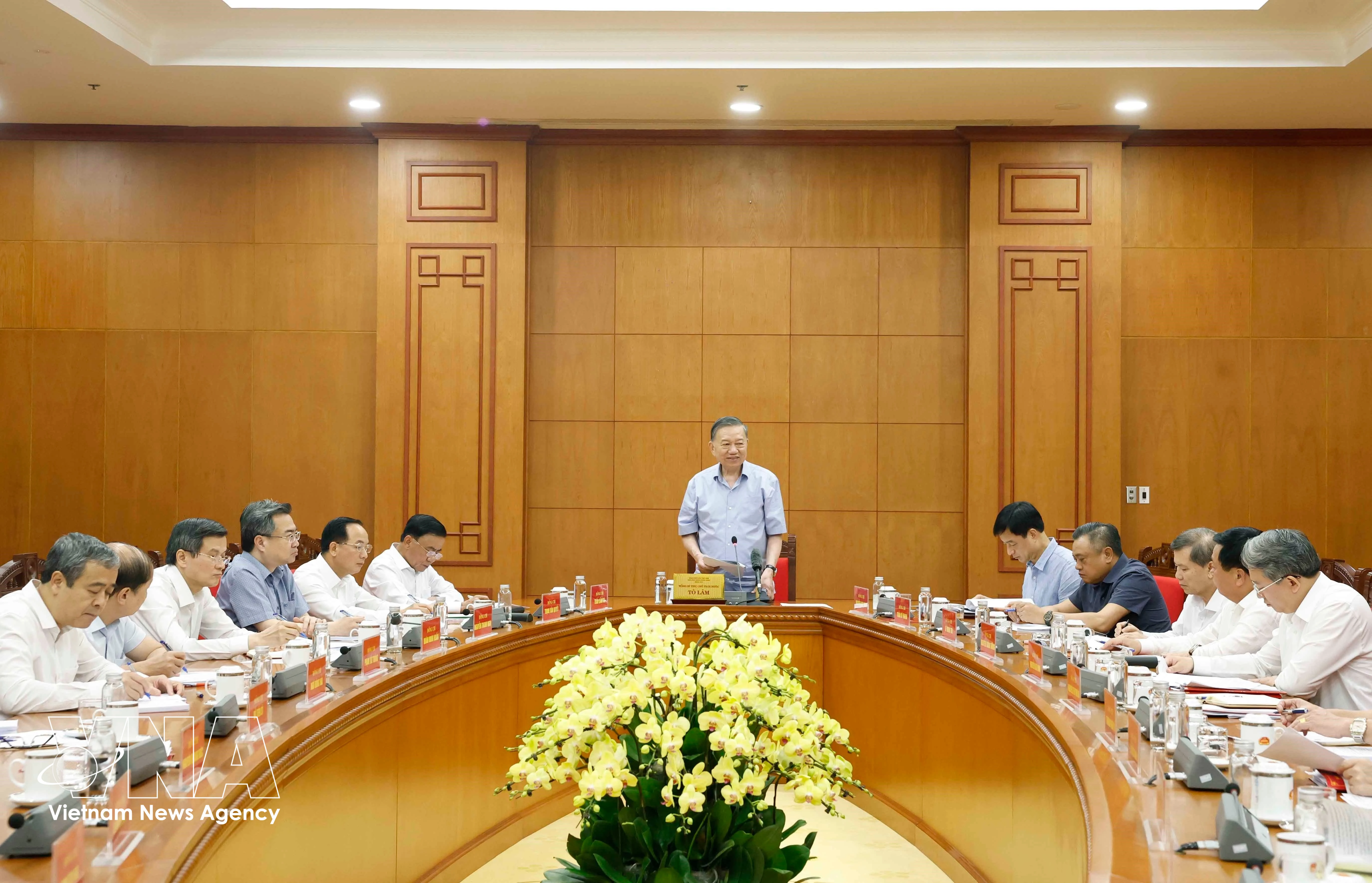
Hanoi (VNA) – Party General Secretary and State President To Lam on June 15 chaired a working session with the Party Central Committee’s Commission for Information, Education and Mass Mobilisation to provide comments on the draft strategy for the Party’s ideological work in the context of digital transformation.
Participants focused discussions on several issues, including the position, scope and nature of the strategy; pillars relating to the political and ideological foundation; protection of the Party’s ideological foundation in cyberspace; and implementation mechanisms.
Concluding the session, General Secretary and President Lam affirmed that formulating the strategy is an objective and urgent requirement with long-term significance.
The overarching requirement, he stressed, is to ensure that ideological work truly becomes an essential leadership capability of the Party in the digital era, contributing to safeguarding the Party’s ideological foundation, strengthening social consensus and public trust, and supporting the successful achievement of national development goals.
Expressing broad agreement with the draft’s overall approach, the top leader requested that it clearly reflect a shift in thinking to meet the objectives of enhancing public confidence, political communication modernisation, and dialogue and persuasion. It should also help use data to understand developments and improve forecasting, early warning and proactive guidance from an early stage and from afar. He also stressed the need to avoid turning ideological work into an overly technical exercise.
Technology, data and artificial intelligence, he said, are highly important tools, but cannot replace political steadfastness, theoretical foundations, revolutionary ethics, the capacity for dialogue, the exemplary responsibility and persuasive ability of officials and Party members.
The strategy, he added, should adopt the guiding principle of being proactive, sharp, persuasive, and effective.
General Secretary and President Lam underlined that the overall objective is to build a modern, proactive, professional and effective system of Party ideological work that operates coherently in all circumstances, based on a solid political foundation, unified digital data, modern political communication, substantive political theory education, and a contingent of officials possessing political mettle, intellectual capacity, digital competence and a strong sense of exemplary responsibility.
He suggested that a long-term task should be to unify awareness and responsibility across the Party regarding ideological work under new conditions, making clear that this is a highly important Party-building task directly linked to leadership capacity, governance capability, implementation of resolutions and consolidation of public trust. It should not be regarded solely as the responsibility of agencies in charge of communications, mass mobilisation, media, technology or culture. Party committees, particularly their leaders, must take direct responsibility for leadership, supervision and implementation.
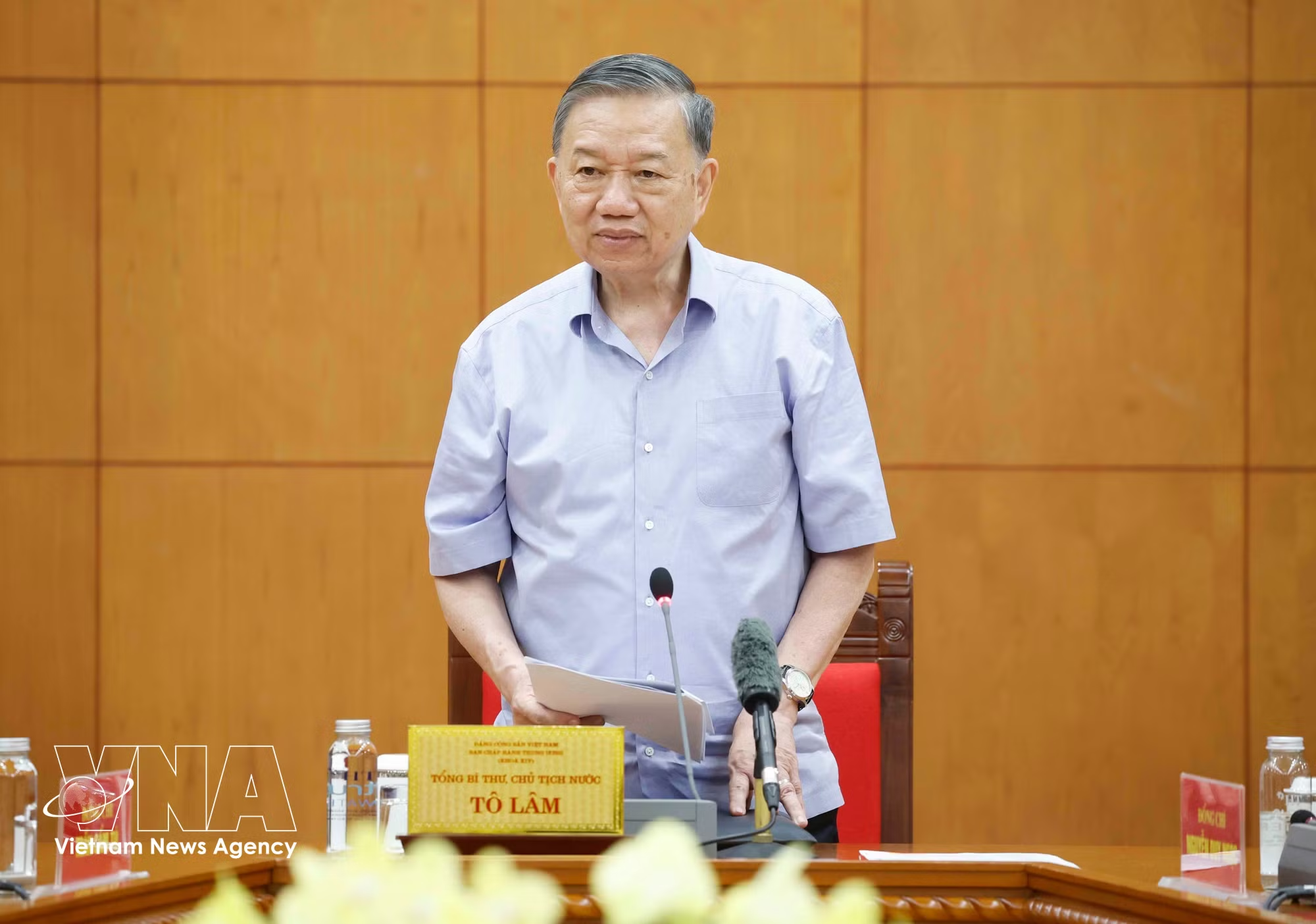
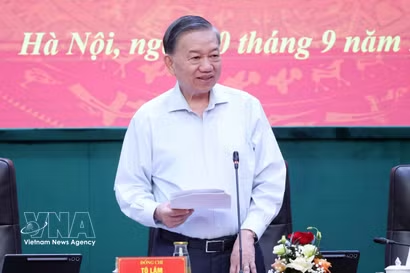
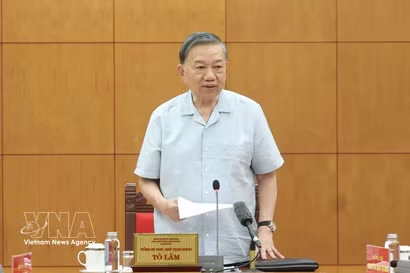
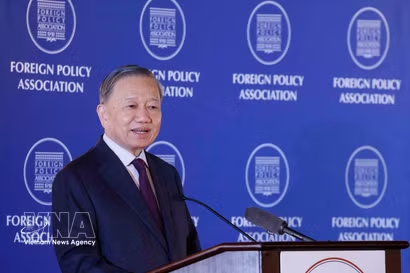
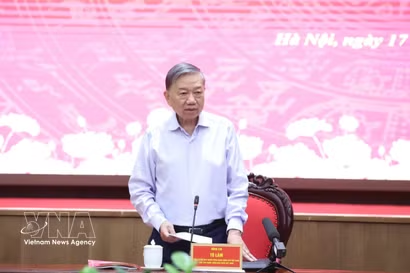
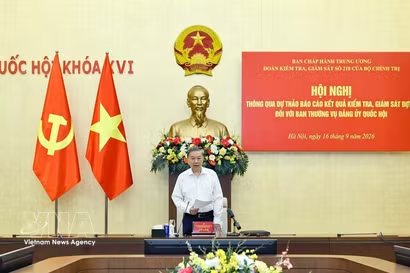
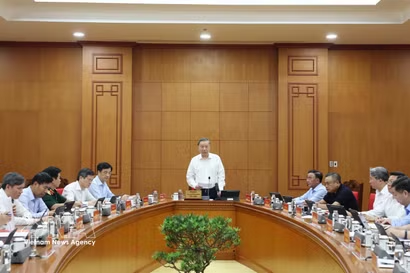
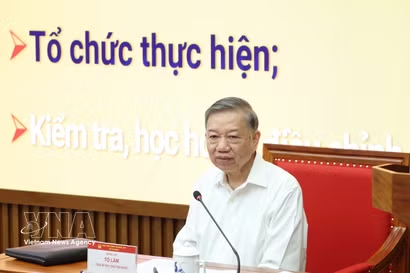
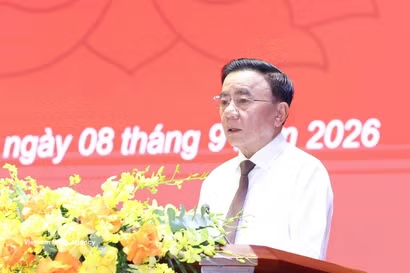
Party General Secretary and State President To Lam speaks at the working session in Hanoi on June 15, 2026. (Photo: VNA)
The top leader stated that a digital data ecosystem should be developed for ideological work, public opinion, journalism, communications, study of Party resolutions, grassroots feedback and information systems, ensuring interoperability, security and confidentiality to directly support Party committees in leadership and direction. The application of technology and artificial intelligence should remain controlled and guided by ethical standards, with technology serving people rather than replacing political responsibility.
It is also necessary, he noted, to strengthen analytical, forecasting and early-warning capabilities. This is the key step in shifting ideological work from a reactive to a proactive approach, moving from dealing with issues after they arise to providing guidance from an early stage and from afar. Priority should be given to promptly identifying ideological issues, public sentiment, opinion hotspots, harmful information, campaigns aimed at manipulating perceptions, technology-generated false content, and livelihood-related issues that could be exploited or distorted.
A longer-term task, the top leader said, is to build a positive information ecosystem and promote the role of the people. This includes mobilising the strength of the press and media, officials and Party members, intellectuals, artists, trusted figures, positive influencers and all sections of society to disseminate accurate and constructive information, uphold what is right and rebut what is wrong. The people, he stressed, are not merely recipients of information but also participants in building trust, safeguarding the Party’s ideological foundation and shaping a strong public support base in cyberspace.
He also emphasised the need to build a capable workforce, improve institutions and reform evaluation methods, including standardising the competencies of officials engaged in ideological work, among other tasks.
The General Secretary and President requested the commission to urgently finalise the proposal with the spirit of being commensurate in scope, clear in responsibilities, feasible in implementation, measurable in outcomes and accountable in execution, for early submission to the Politburo./.