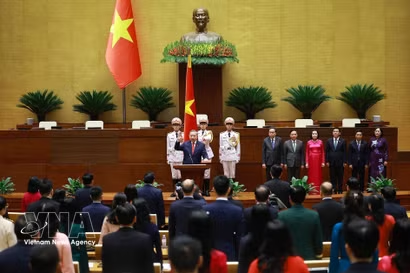
New York (VNA) – The US-based Foreign Policy Association (FPA) has decided to award the FPA Medal, its highest honour, to General Secretary of the Communist Party of Vietnam and President To Lam in recognition of his leadership and vision, which also reflects Vietnam’s increasingly important stature, role, and voice on the international stage.
The medal is expected to be presented during the top Vietnamese leader’s attendance at the high-level week of the 81st session of the United Nations General Assembly and his bilateral engagements in the US.
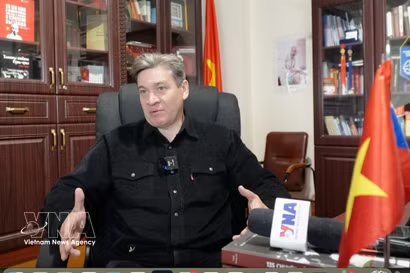
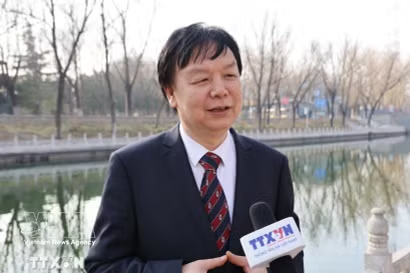
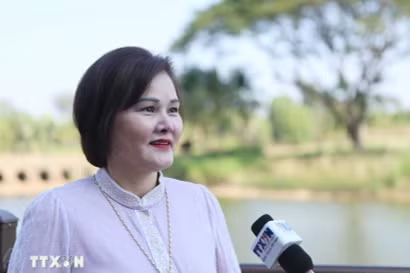
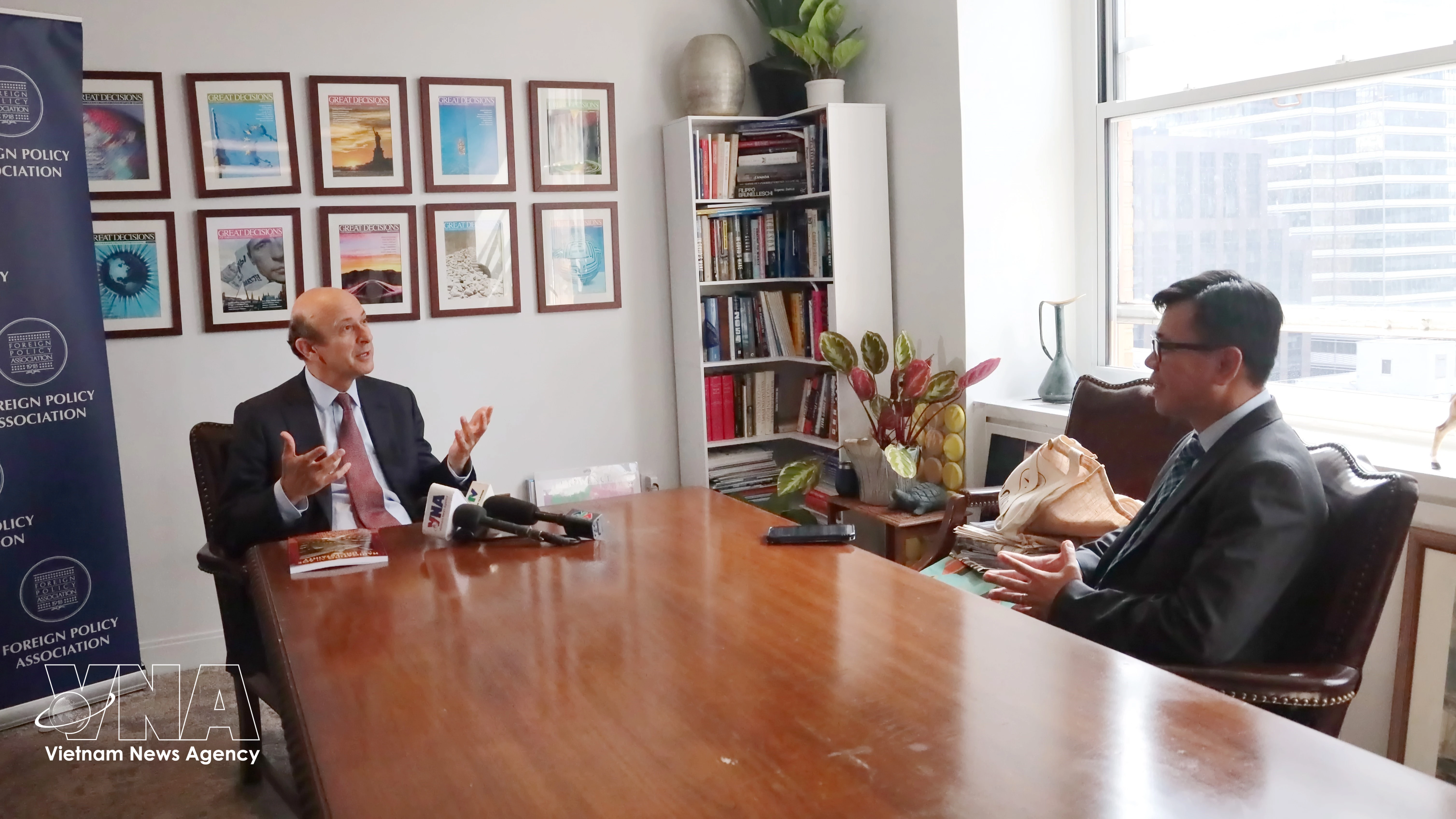
Speaking to a Vietnam News Agency correspondent in New York, FPA President and CEO Noel V. Lateef emphasised that awarding the FPA Medal to General Secretary and President Lam serves as a tribute both to the Vietnamese leader personally and to a Vietnam that is undergoing robust transformation and integrating more deeply, proactively, and responsibly into regional and global affairs.
He said Vietnam has emerged as one of the world's most dynamic economies; it is a key member of the Association of Southeast Asian Nations (ASEAN) and holds an increasingly influential voice in the Indo-Pacific region.
From the perspective of an organisation dedicated to fostering American public awareness of foreign policy and global issues, the FPA leader held that Vietnam's impressive development is reflected not only in its economic growth rate but also in its ability to balance relationships, make practical contributions to regional stability, and promote international cooperation.
He stated that the most significant message conveyed by the presentation of the FPA Medal is the recognition of Vietnam’s emergence as an increasingly prominent player within the economic and strategic architecture taking shape in the Asia-Pacific region. Vietnam’s rapid development demonstrates the effectiveness of a constructive foreign policy. It advocates fostering friendship and cooperation with many nations, an approach that aligns with Vietnam’s history, geography, and national experience.
Amidst strategic competition among major powers, protracted conflicts in various regions, rising geopolitical instability, supply chain disruptions, and intertwined non-traditional challenges, a foreign policy of independence, self-reliance, and multilateralisation and diversification of relations serves as the foundation for Vietnam to safeguard its national interests while expanding avenues for cooperation toward peace and development.
This approach represents not only a flexible response to the complex shifts in the international landscape but also a substantive foreign policy mindset: seeking common ground, minimising differences, avoiding confrontation, and seizing development opportunities through mutually beneficial cooperation, according to Lateef.
That the FPA honours General Secretary and President Lam at a time when the world faces numerous uncertainties also conveys a message regarding the value of dialogue, trust, and multilateral cooperation. These principles align with the policy of resolving disputes through peaceful means, based on international law and respect for the independence, sovereignty, equality, and legitimate interests of nations, he said.
Assessing Vietnam's role within ASEAN and the Indo-Pacific region, the FPA President noted the country is making constructive contributions and holds a significant voice.
He highlighted the special importance of the ASEAN region, comprising 11 nations with a combined population of approximately 864 million and a GDP nearing 4 trillion USD. These figures demonstrate that ASEAN is not merely a space for regional integration but also an increasingly vital hub for growth, trade, investment, and connectivity within the global economy.
Amid the restructuring of trade, investment, and technology flows as well as supply chains, ASEAN’s role in maintaining an environment of peace, stability, openness, and inclusivity has become increasingly crucial.
Lateef cited recent remarks by Philippine Secretary of Foreign Affairs Maria Theresa Lazaro regarding the "Three Us"—Upheaval, Uncertainty, and Unpredictability—to characterise the current international landscape. As the ASEAN Chair for 2026, the Philippines aims for the bloc to serve as a stabilising force for the region within this volatile international environment.
According to the FPA President, Vietnam is also generating such a positive impact. This assessment reflects the international community's expectations for nations that possess the capacity for internal development while maintaining a balanced, consistent, and responsible foreign policy.
This role is particularly significant given Vietnam's status as a country bordering the East Sea, situated at a crucial juncture connecting mainland Southeast Asia with the region's maritime space. Vietnam has a direct interest in upholding peace, stability, security, and the freedom of navigation and overflight, while also being motivated to promote respect for international law and the peaceful resolution of disputes, he added.
By actively participating in ASEAN, ASEAN-led cooperation mechanisms, and multilateral forums, Vietnam is helping to reinforce the bloc’s centrality, promote cooperation over division, and encourage nations to address differences through dialogue and trust-building, Lateef opined.
He noted that Ho Chi Minh City and Hanoi are among the five fastest-growing cities in Asia. While this observation must be viewed in the context of the specific ranking criteria used in each study, he believed the dynamism of Vietnam’s two economic engines clearly demonstrates the country's growth potential and the increasing significance of Southeast Asia to the global economy.
Assessing the Vietnam–US relationship, he described it as an extraordinary journey. The two countries have moved from conflict and estrangement to reconciliation, partnership, and an increasingly ambitious agenda for cooperation. This is one of the most significant messages accompanying the presentation of the FPA Medal to General Secretary and President Lam. That message holds value not only for Vietnam–US ties but also shows how reconciliation, dialogue, and cooperation can serve as a policy model for nations that once held deep-seated differences.
Vietnam–US relations have been elevated to a Comprehensive Strategic Partnership, establishing a framework for the two to advance cooperation across a wide range of areas, including the economy, trade, investment, science – technology, education – training, healthcare, and energy, as well as in addressing the legacies of war.
The expert perceived that the policy address expected to be delivered by General Secretary and President Lam at a forum co-hosted by the FPA and Columbia University will provide the American public and researchers with a clearer understanding of Vietnam's current policy direction.
The next phase of bilateral relations should focus on transforming the Comprehensive Strategic Partnership from a high-level diplomatic framework into a relationship that delivers tangible and palpable benefits to the people of both Vietnam and the US, he suggested.
Accordingly, trade and investment should serve as a central pillar. Both sides need to strive for a mutually beneficial economic relationship, including by improving market access, encouraging responsible investment, enhancing supply chain resilience, and creating more opportunities for small and medium-sized enterprises.
Lateef said science – technology and education should become another key pillar of the Vietnam–US Comprehensive Strategic Partnership, adding that cooperation in artificial intelligence, semiconductors, digital infrastructure, biotechnology, and advanced manufacturing could help strengthen the innovation capabilities of both economies.
In addition, the FPA President sees substantial cooperation potential regarding public health and energy. The five-year bilateral health cooperation agreement lays the groundwork for enhancing medical research, strengthening health security, and building the capacity of the healthcare workforce.
Regarding energy, he believed cooperation should support goals for reliable and cost-effective growth while helping Vietnam diversify its energy system and develop clean technologies. This is a matter of strategic importance for a rapidly growing economy with rising energy demand that must simultaneously meet sustainable development and green transition goals.
Lateef stressed that the most significant outcome of the FPA Medal presentation and the visit to New York by General Secretary and President Lam will be the maintenance of cooperative momentum and the reinforcement of confidence at the highest level that the Vietnam–US Comprehensive Strategic Partnership is enduring and capable of making continued progress, regardless of fluctuations in the international landscape.
For its part, the FPA can contribute by promoting people-to-people dialogue and building bridges of empathy, understanding, and opportunity, he stated.
The organisation’s honouring of the top Vietnamese leader is not merely a ceremonial event. It serves as a recognition of Vietnam’s development and integration journey; its foreign policy of independence, self-reliance, multilateralization and diversification of external relations, with a strong commitment to international law; its constructive role in multilateral institutions such as the UN and ASEAN, as well as within the Indo-Pacific region; and the significance of the Vietnam–US relationship as a story of reconciliation, trust, and cooperation for the benefit of the people, Lateef remarked./.