Cairo (VNA) - More than a century after young patriot Nguyen Tat Thanh set foot in the Egyptian port city of Port Said during his journey to seek a path for national salvation, that historic stop continues to be remembered by many Egyptian scholars and politicians as a significant milestone in the revolutionary life of President Ho Chi Minh.
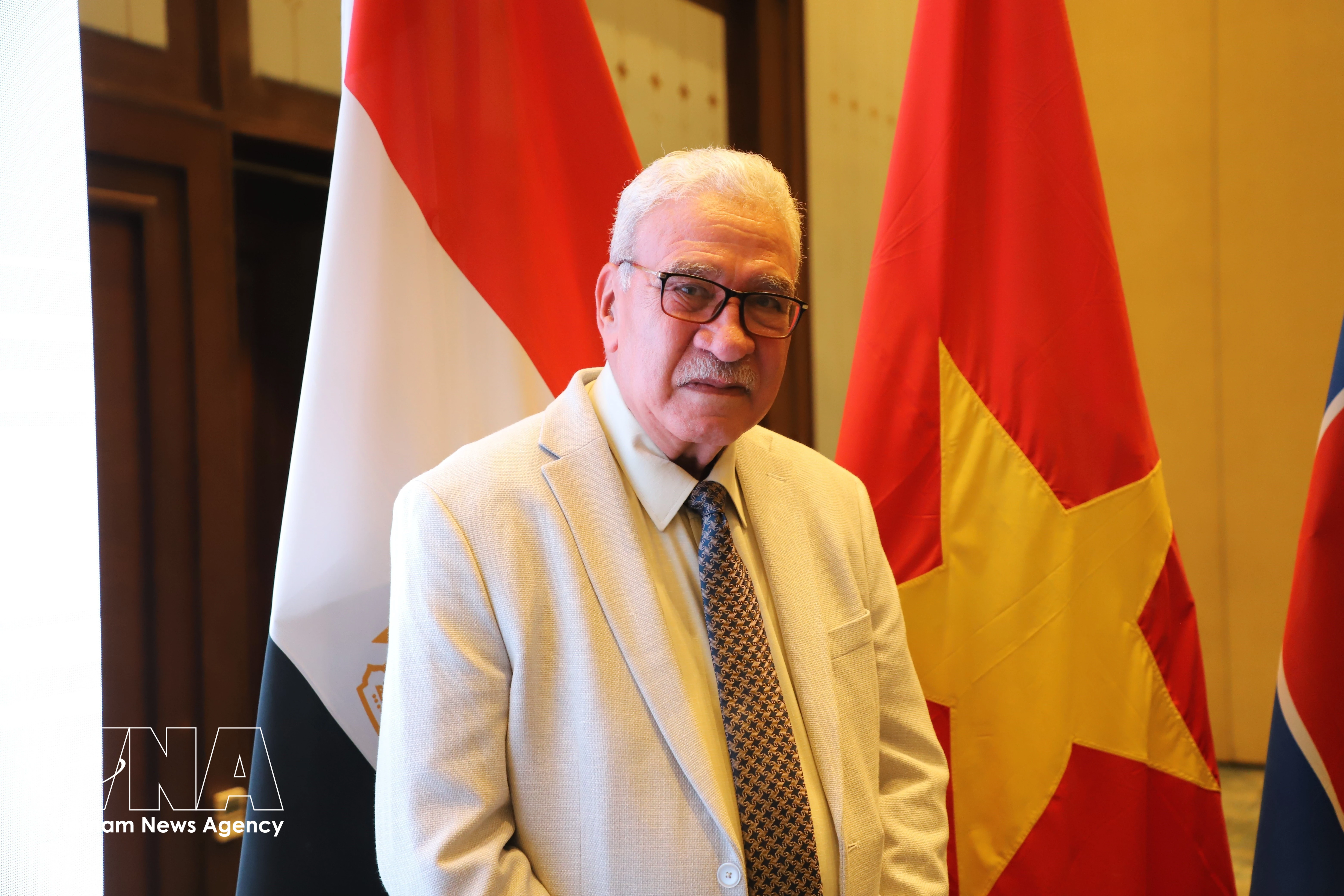
“This stop can be regarded as one of the earliest “points of contact” between the Vietnamese revolutionary movement and the Arab-African world,” Secretary-General of the Egyptian Communist Party Salah Adly Abdelhafiz told a Vietnam News Agency correspondent in Cairo on the occasion of the 115th anniversary of President Ho Chi Minh’s departure to seek a path for national liberation (June 5, 1911-2026).
He said although his visit to Port Said was brief, it carried clear symbolic significance for future Vietnam-Egypt relations.
Located at the northern entrance to the Suez Canal - the strategic waterway linking the Mediterranean Sea and the Red Sea, Port Said was, in the early 20th century, a bustling centre of international trade. At the same time, it offered a vivid reflection of the social contradictions when Egypt was under colonial rule.
According to Salah Adly, in Egypt, Nguyen Tat Thanh had the opportunity to directly observe social life under colonial rule, with a clear divide between the ruling class and local working people.
Ho Chi Minh’s experience in Egypt helped shape the understanding that oppressed peoples, whether in Southeast Asia or North Africa, shared common circumstances under colonial domination, he stated.
"These early experiences helped Nguyen Tat Thanh realise from an early stage that oppression was not unique to Vietnam but was widespread across many other colonized countries as well. Through this understanding, he gradually developed an awareness of the global nature of colonialism while also opening a new direction for Vietnam’s national liberation struggle in later years," he commented.
That internationalist thinking later became a foundation for Vietnam’s solidarity and cooperation with developing countries, including Egypt, he added.
After gaining independence, Vietnam and Egypt quickly established diplomatic relations in 1963 and shared many common positions within national liberation movements and international forums.
It can be said that Ho Chi Minh’s early awareness contributed to shaping the spirit of “South-South solidarity” in Vietnam’s foreign policy, with Egypt standing out as a representative partner, the Secretary-General of the Egyptian Communist Party said.
According to him, the 1911 stop in Port Said did not directly create diplomatic ties, but it carried value as a “seed of awareness” that contributed to building the ideological foundation for the friendship and solidarity that later developed between Vietnam and Egypt.
Regarding relations between Vietnam and Egypt, he said bilateral ties have remained stable and have recorded positive progress.
The two countries, which established diplomatic ties in 1963, regularly exchange delegations and coordinate closely in international forums. In particular, then State President Luong Cuong’s visit to Egypt in 2025 created fresh momentum for bilateral relations.
Economic cooperation between the two sides has also advanced, with trade turnover gradually increasing. Vietnam exports agricultural products and consumer goods, while Egypt serves as an important gateway to African and Middle Eastern markets.
In addition, cooperation in culture, education, and people-to-people exchanges continues to be strengthened.
However, he noted there remains substantial untapped potential, particularly in investment and logistics, and both countries can further expand cooperation in the coming period.
On this occasion, Salah Adly extended his congratulations to Vietnam on its recent development achievements.
“From the perspective of a friend who has always valued Vietnam highly, I would say that Vietnam’s recent developments are highly positive and noteworthy.”
The successful organisation of the 14th National Party Congress demonstrates Vietnam’s organisational capacity, political stability, and long-term strategic vision.
The establishment of the new Government reflects determination to continue administrative reforms, improve governance efficiency, and adapt to an increasingly volatile global environment.
Even more impressive is that Vietnam is entering a new stage of development - not only maintaining growth but also focusing on quality, innovation, and enhancing its international standing, he said.
The spirit of the “nation’s rise” reflects growing confidence built upon historical foundations, national identity, and development achievements.
“From Egypt’s perspective, we see Vietnam as a successful model of a developing country that has effectively combined political stability with economic dynamism,” he stressed.
These achievements are not only meaningful for Vietnam itself but also provide encouragement and inspiration for countries across Africa and the Middle East, including Egypt, he added.
He expressed his belief that with its current momentum, Vietnam will continue playing an increasingly important role on the international stage while opening up new opportunities to deepen friendship and substantive cooperation between the two countries in the years ahead./.